
Blog ·
How to ask for a testimonial that says something specific

"Would you write us a testimonial?" asks a customer to choose the story, decide what matters and write the final copy. Some people are happy to do that. Others send a polite sentence that gives the next buyer very little to go on.
A few questions can make the request easier. Ask about a real task, what changed and what still gets in the way. You may get a useful quote. You may also learn that the customer is not ready to recommend you.
Ask about something that happened
Instead of opening with "What do you love about us?", try:
- What were you trying to do when you started using the product?
- How were you handling that before?
- Can you describe a recent time it helped?
- What would you still change?
These questions leave room for a mixed answer. Avoid steering someone toward a result they have not claimed, such as "How much time did we save you?"
If they say it saved time, ask which task changed. Ask for a number only if they have a reasonable way to estimate it.
A useful quote does not need a dramatic result
Here is a fictional example of the difference:
General praise: "It's easy to use and the team is great."
A specific account: "I used to copy each request out of email before our Monday meeting. Now I can open the shared list and see what's waiting."
The second version names a task and a change. It does not need an invented percentage or a claim that the product transformed the company.
If the customer also says setup took longer than expected, keep that feedback in the conversation. Do not edit it away to make the interview sound happier.
What Tessa produces
Tessa interviews customers by voice or text and can draft a testimonial from the conversation. The testimonial has a short quote, points about what worked and what could be better, and a longer write-up.
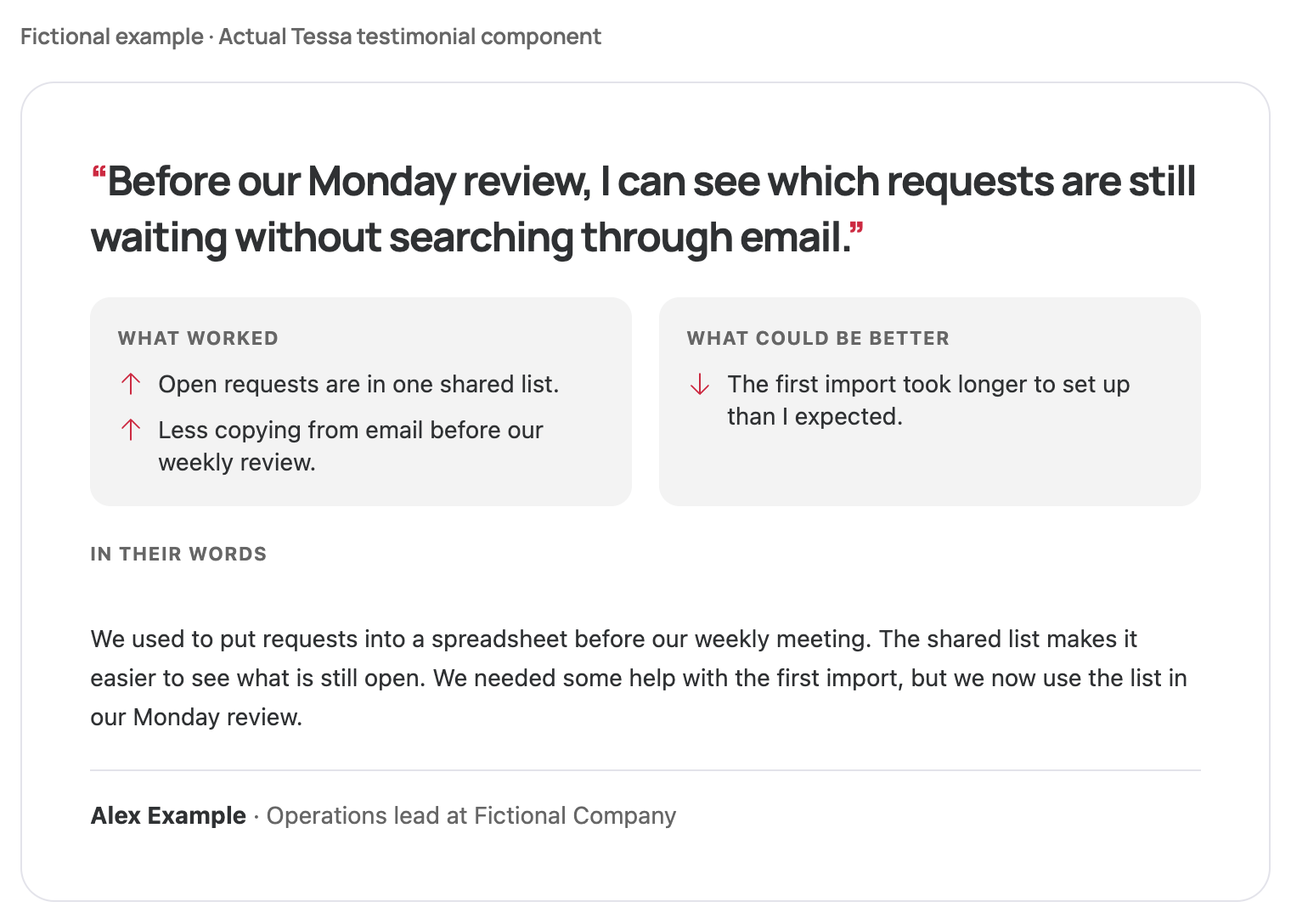
Product screenshot: the actual testimonial display component with entirely fictional example content. This is a format example, not a customer endorsement or a measured result.
An AI-written draft is still a draft. Check that it reflects the conversation and does not turn "this helped once" into "this always works."
Be precise about approval
Tessa's interview disclosure says that testimonials created during the interview are approved for public use by default. Participants can review the draft, choose their attribution and unapprove it. A member separately chooses which testimonials to show and whether the testimonial page is public.
That is different from a workflow that waits for a separate approval click on every quote. Read the consent notice before inviting customers, and explain the arrangement in your request.
Choosing anonymous attribution also does not guarantee that the person is unknown to your team. A personal invitation can already identify them.
Whatever tool you use, make the intended use clear. If someone asks for a change, get the wording resolved with them before publishing or reusing it elsewhere.
Keep the invitation modest
For example:
Would you be willing to share what changed after you started using the product, and what we should still improve? The link opens a short voice or text interview. It can also create a testimonial for public use, which you can review and unapprove. There is no need to make an account.
Adapt that fictional invitation to your actual interview and consent terms. If you only want private product feedback, use a feedback-only interview rather than asking people to navigate a testimonial request.
You can try Tessa from the homepage to see whether this is a reasonable request for your customers. If they already have a clear quote ready to send, a short email may be enough.