

Blog ·
Tessa vs Qualtrics: a focused interview tool or a wider research program

If your team already runs research in Qualtrics, check what your existing setup can do before adding another tool. Qualtrics includes AI follow-ups; you may be able to answer a new research question within the program you already manage.
Tessa is worth considering when the task is narrower: invite customers to a voice or text interview, gather feedback and optionally draft testimonials from those conversations.
We build Tessa. Qualtrics descriptions below come from its official pages checked October 22, 2026. This is a scope comparison, not an evaluation of enterprise procurement, security or research quality.
What Qualtrics already covers
Qualtrics describes a broader experience management platform. Its Conversational Feedback documentation covers adaptive follow-ups to open-text answers and prompts for clearer responses. Plan availability, administrator settings and permissions affect access.
That means "our survey cannot ask any follow-ups" is a claim to check, not a reason by itself to replace the platform.
If you need several teams to work within an established research program, assess the reporting, permissions, integrations and study methods you rely on. A focused interview product should not be assumed to cover those requirements.
What a Tessa interview looks like
You give Tessa the questions you want covered and background about your product or audience. Customers open a link and answer by voice or text. Tessa can follow up on what they say, and findings are organized around your research questions.
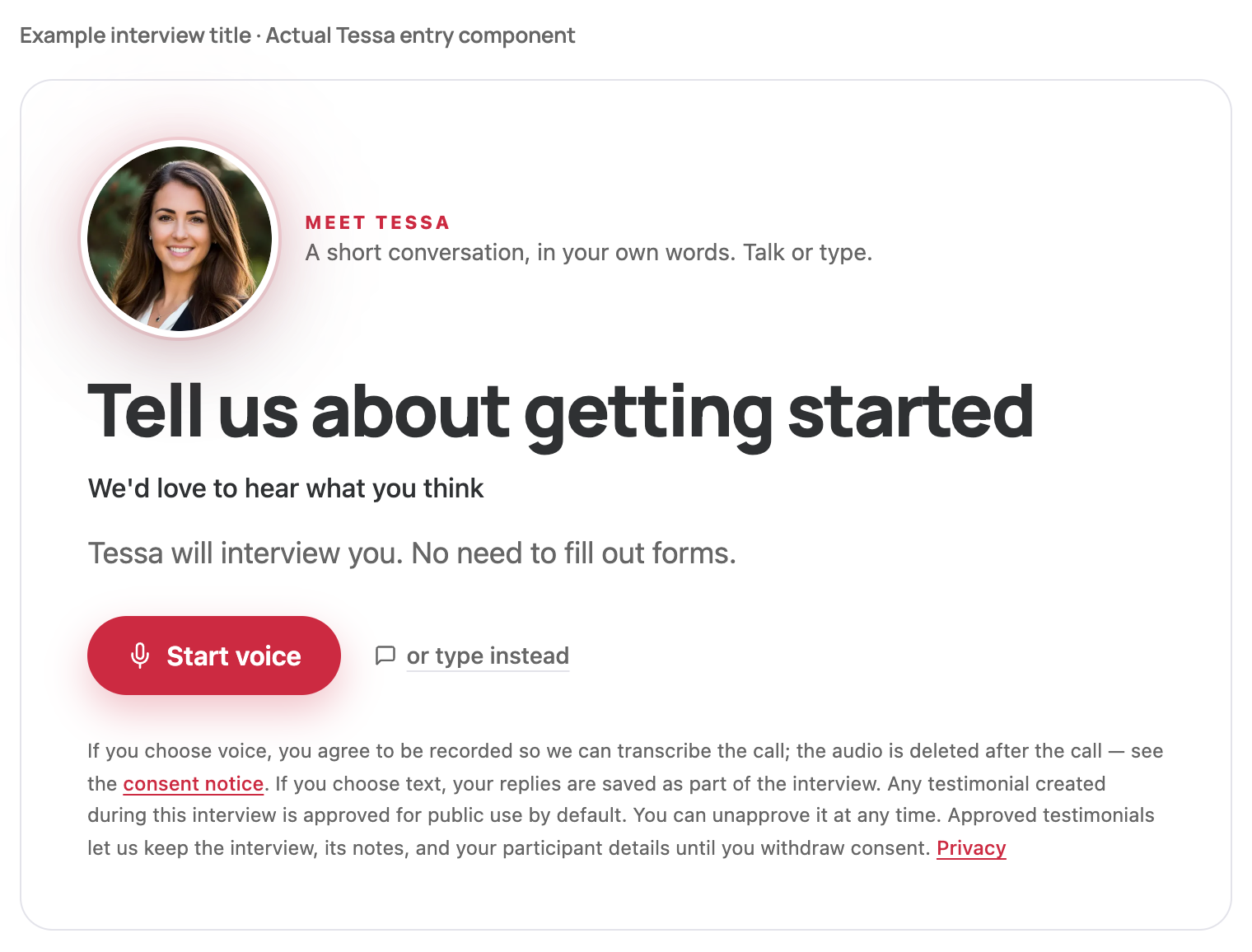
Product screenshot: the actual Tessa entry component with a fictional onboarding title. This illustrates the participant entry, not an enterprise deployment or a completed research study.
For a fictional example, a product manager might interview customers who created a project but never invited coworkers. That could reveal a question about team permissions or uncertainty about when to invite people. The manager still needs to inspect those explanations and decide what to test.
If testimonials are enabled, Tessa can draft one from the interview. Participants see a disclosure explaining default public approval and can review and unapprove the testimonial. Use feedback-only interviews when you are asking for private research.
Decide what must stay consistent
| Requirement | What to check |
|---|---|
| Keep work inside an existing research program | Whether your Qualtrics setup already supports the task |
| Run voice or text customer conversations | The participant experience and follow-up quality in the products you evaluate |
| Produce public testimonials from interviews | Drafting, attribution, withdrawal and publication steps |
| Meet organizational security or governance requirements | The exact requirements and each vendor's current documentation |
Tessa is not presented here as a replacement for an enterprise experience management program. There is also no claim of a native Qualtrics integration.
Run one interview before designing a rollout
Choose one research question and try answering it as a participant. Review the transcript and resulting findings. Ask whether a teammate could tell what happened without taking the summary on trust.
If you already have Qualtrics, try the relevant workflow there first. You can also use the Tessa homepage demo to judge whether its narrower approach fits the conversation you want to have.