

Blog ·
Tessa vs SurveyMonkey: choosing a survey or a customer interview

If you need every customer to answer the same satisfaction question, SurveyMonkey is a sensible place to start. If you need to understand what someone meant by "the setup was difficult," an interview may help.
The boundary is not absolute. A well-designed survey can collect useful explanations, and an interview can produce a vague answer. Choose based on the decision you need to make.
We build Tessa. SurveyMonkey descriptions below come from its official site and documentation, checked October 22, 2026. We have not run a controlled comparison of response quality.
Consistent questions help you compare
SurveyMonkey supports surveys, templates, reporting and AI features for creating and analyzing surveys. Its product overview describes that broader workflow. It also supports carrying answers into later questions, so it would be wrong to say surveys cannot have follow-ups.
For recurring measurement, consistency matters. If you change the question, audience and response format every month, a change in the score becomes harder to interpret.
An interview is useful for a different task: exploring what happened around a particular answer.
A score and a story answer different questions
Suppose a customer gives onboarding a low rating and writes "too much work." You might need to know whether the problem was entering data, inviting coworkers or getting internal approval.
Tessa runs a voice or text conversation and can ask about the details of that answer. You provide the research questions and relevant background; participants open a link without creating an account.
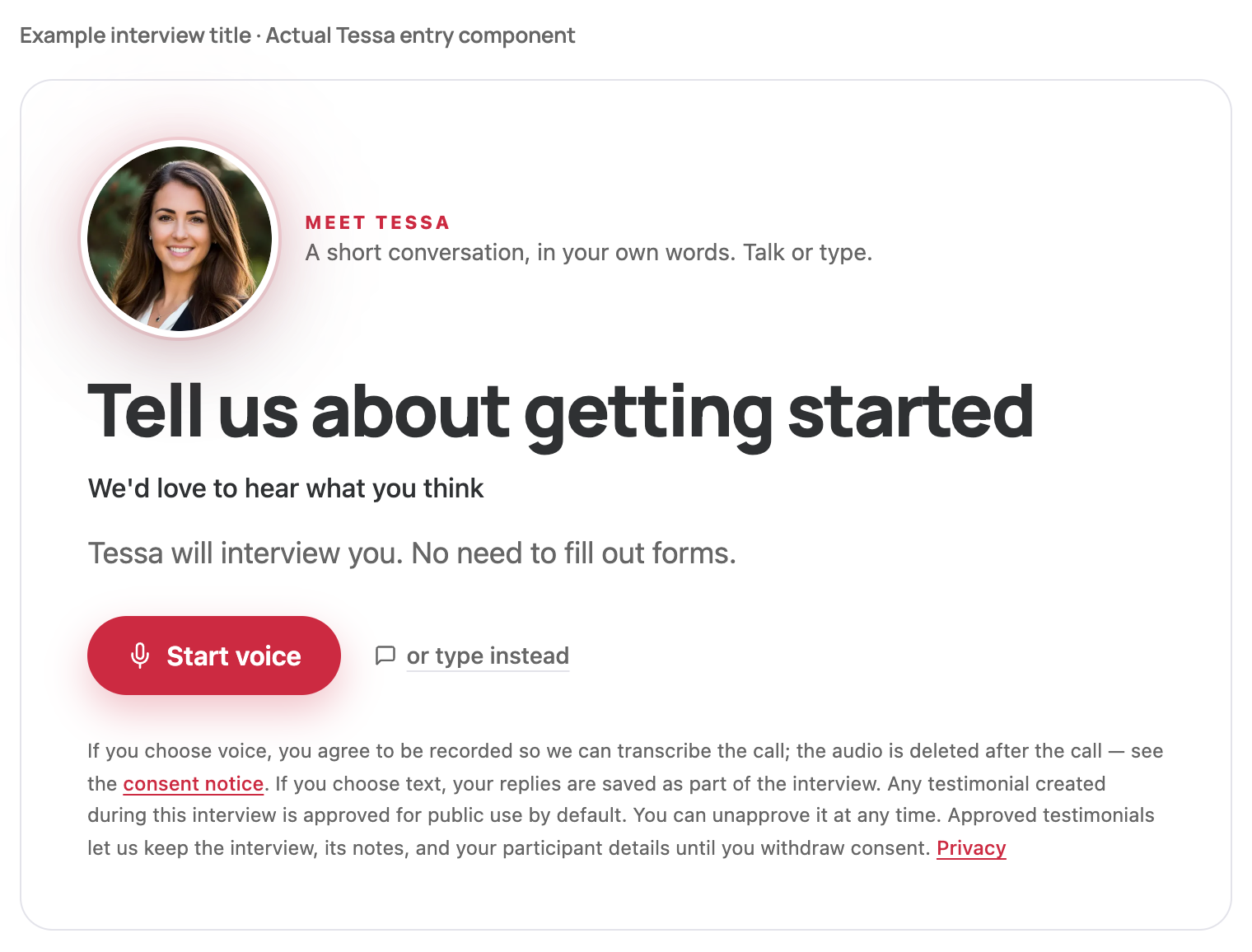
Product screenshot: Tessa's actual entry component with a fictional onboarding title. This shows the starting experience, not a survey result or a completed interview.
This does not mean voice is always better. Some customers prefer a short form, and an additional conversation asks more of them.
Choose by the output you need
| You need to... | Start with... |
|---|---|
| Compare answers to a fixed rating or multiple-choice question | A survey |
| Track a measure using the same questions over time | A survey |
| Understand a specific experience in the customer's own words | An interview |
| Explore an unclear answer without writing every possible branch | An interview |
If you already use SurveyMonkey, you may only need to invite a small, varied group of respondents to follow-up interviews. Keep survey scores separate from qualitative findings. A few interviews cannot tell you how common a problem is across all customers.
What Tessa adds, and what it does not
Tessa organizes feedback around the questions you set. With testimonial collection enabled, it can also draft a short quote and a longer account from the conversation. Its disclosure explains default public approval and the option to unapprove; use feedback-only interviews when public testimonials are not part of the request.
Tessa is not a substitute for a survey reporting program. It also does not remove the need to read the underlying conversation, consider who replied and decide what to investigate.
Try the homepage demo with one question your last survey left unanswered. Judge whether the follow-up gives you something useful enough to justify asking customers for more time.