

Blog ·
Lost-deal interviews: how to ask why a prospect didn't buy
A deal marked "price" in the CRM leaves a lot unanswered. Was the budget unavailable? Did the prospect prefer another product? Did they decide the problem could wait?
The CRM entry may be correct and still too brief to guide a product or sales decision. A short conversation with the person who evaluated you can add context. Some people will not reply, and those who do may not represent everyone you lost.
Invite people while the decision is still familiar
Start with a manageable group of recent lost deals or trials that did not convert. Include different outcomes: another vendor, an internal solution and no purchase. Keep recent wins separate so you can compare them later.
Use the contacts who actually took part in the evaluation. A panel of people who fit your target market cannot explain a buying decision they did not make.
If possible, have someone other than the salesperson send the request. Explain that this is research and that an answer will not trigger another pitch. Then honor that promise.
Ask about the decision before asking about your product
A useful question order is:
- What were you trying to change when you started looking?
- Which options did you seriously consider, including keeping things as they were?
- What did you choose to do?
- What mattered most in that decision?
- Was there a point when our product stopped being a good fit?
If someone says "too expensive," a neutral follow-up is "What were you comparing the cost with?" Asking "Would you have bought if we'd offered a discount?" can turn a research conversation into a negotiation.
You may learn that a feature mattered, but do not treat "I wanted feature X" as a commitment to buy it.
A fictional example
Prospect: "The price was higher than we wanted."
Follow-up: "How did you plan to use it?"
Prospect: "Only two of us would have used it each month. We couldn't justify moving everyone onto a team plan."
That suggests a question about fit between usage and packaging. One answer is a reason to investigate, not a reason to change your pricing.
Running the interview in Tessa
In Tessa, you can create a question set, add background about the evaluation, and share personal invitation links or a shared link. CSV contact import helps when you already have a list. Participants can answer by voice or text without booking a meeting.
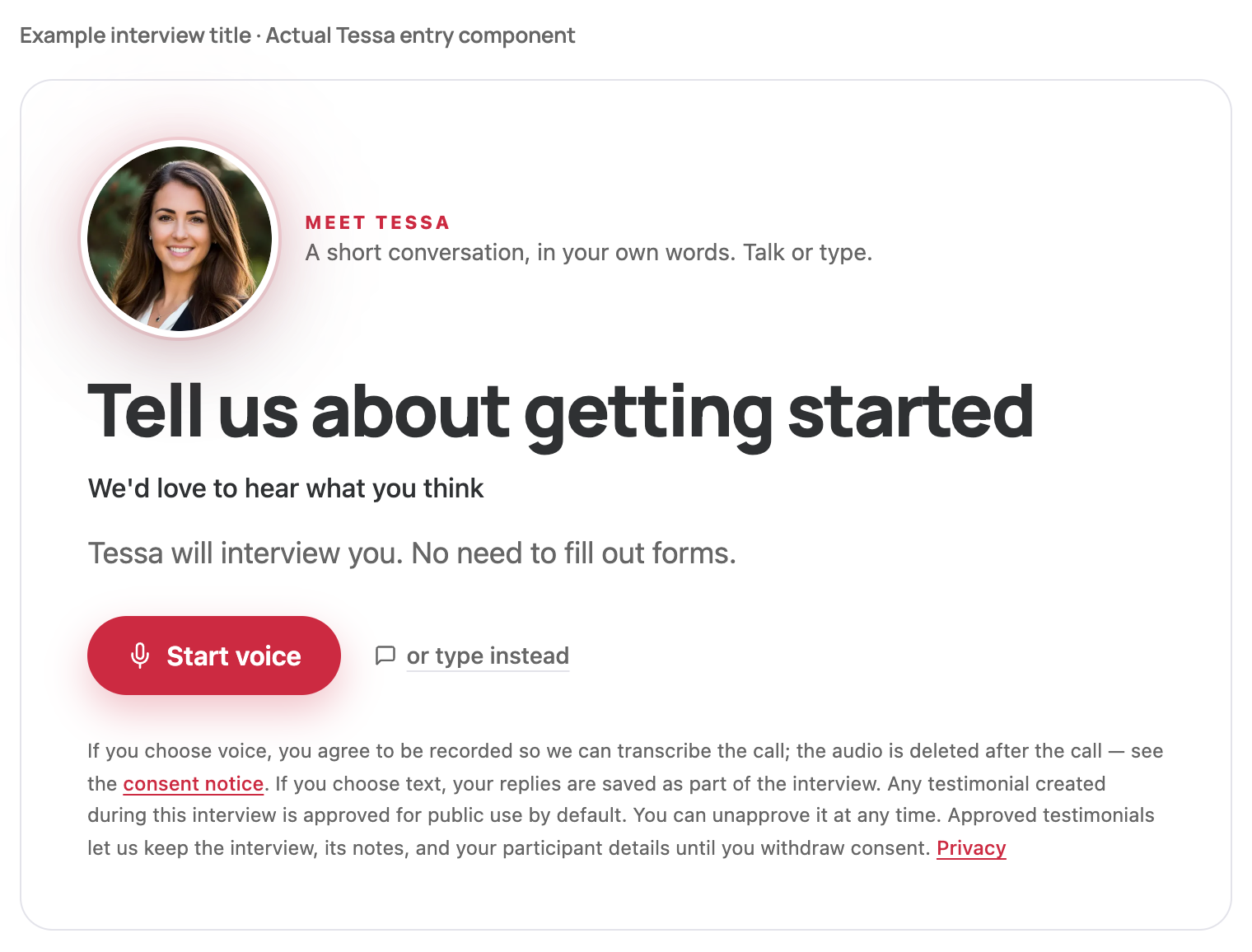
Product screenshot: the actual entry component with a fictional onboarding title. This shows the entry options, not a lost-deal interview or its campaign settings.
For lost-deal research, use a feedback-only interview. A request for a public endorsement is usually a poor fit for someone who decided not to buy.
Review the participant disclosure before sending links. Be specific about who can read the feedback. Do not promise anonymity just because a public testimonial can omit a name: personal invitations and the details of an answer can identify the respondent.
Turn the answers into a small test
Read the conversation alongside the summary. Separate the person's own explanation from your interpretation:
| What the prospect said | What you could investigate |
|---|---|
| "We couldn't get approval for another tool." | Who needs to be involved earlier in the evaluation? |
| "We stayed with the spreadsheet." | What cost or disruption made switching hard to justify? |
| "We couldn't tell if it supported our process." | Where can the trial demonstrate that workflow? |
Look for repeated details across comparable deals. Keep track of which people were invited and which replied so you can see the gaps.
Choose one change to test, such as a clearer trial step or an explanation for a common objection. Keep interviewing afterward to see whether that reason continues to appear.